
Are Crunches Bad for You After Having a Baby? (The Answer Is No)
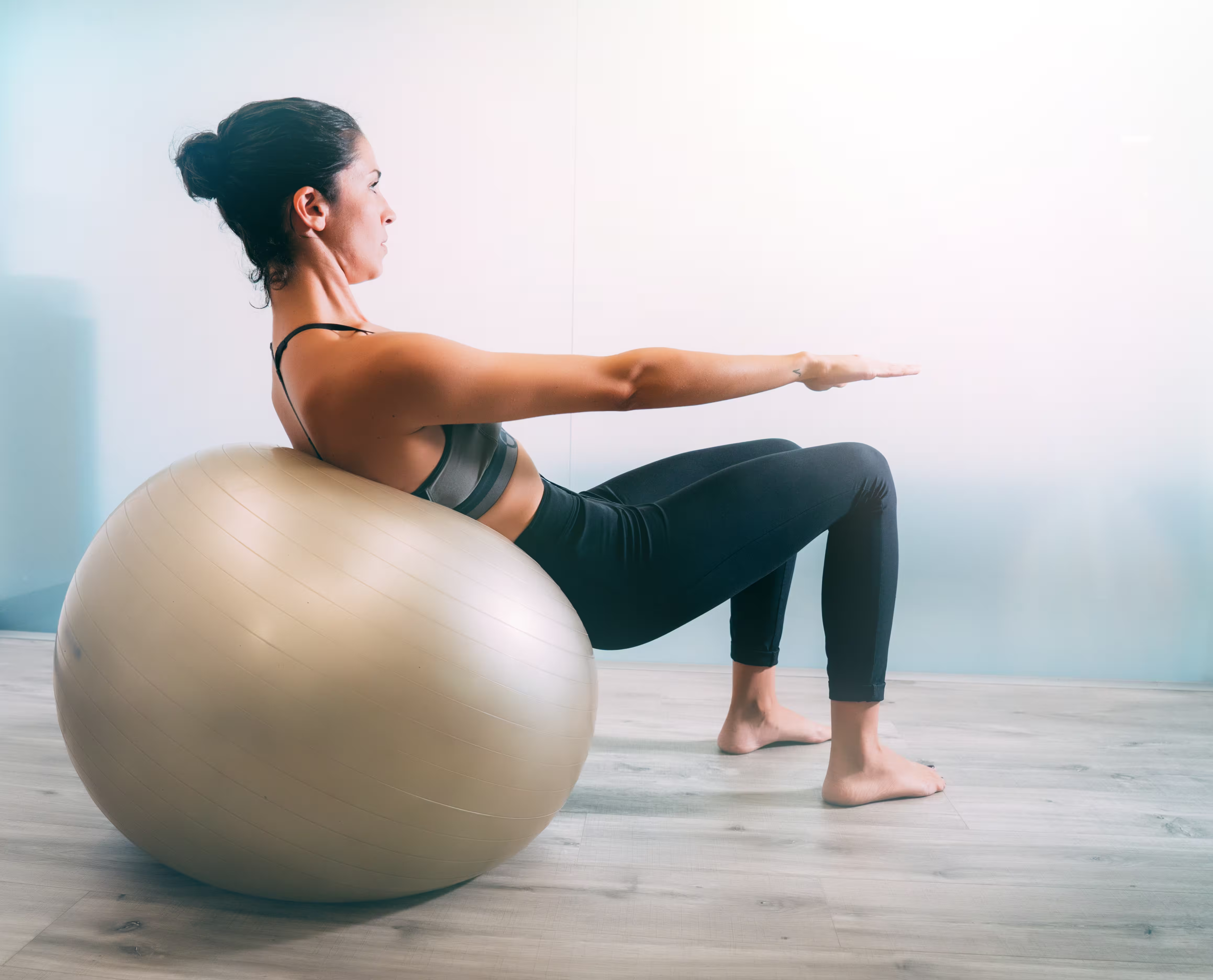
If you've been postpartum at any point in the last ten years, there is a very good chance someone told you to avoid crunches. Maybe it was a well-meaning friend. Maybe it was a blog post you found at 11pm. Maybe it was even a healthcare provider.
And if you have diastasis recti specifically, the advice probably got more intense: no crunches, no sit-ups, no twisting, no heavy lifting, no planks. Stay off your core entirely until the gap closes.
I want to address this directly, because the fear-based messaging around postpartum core exercise has genuinely caused harm. Not in the sense of injured women, but in the sense of women who are under-loading their cores for years, avoiding exercise they love, and feeling like their bodies are fragile and broken.
Here is the evidence-based truth: crunches are not inherently bad. The question is whether you're doing them at the right time, and whether your system is ready for them.
Where This Idea Came From
The "no crunches" rule came from a reasonable place. Research on DRA and intra-abdominal pressure management led to guidelines suggesting that certain exercises could worsen separation or impair healing by increasing pressure in ways the healing linea alba wasn't ready to manage.
The problem is that those guidelines got flattened into a blanket rule and applied to every postpartum body, regardless of how that individual was healing, how her core was functioning, or what her specific goals were. "Avoid crunches" is a lot simpler to say than "progress your loading gradually based on how your system is managing intra-abdominal pressure."
But simple isn't always accurate.
What Actually Matters
The issue was never crunches. The issue is whether your core can manage load without:
• Doming or coning at the midline
• Leaking (any amount of urine)
• Significant pelvic pressure or heaviness
• Symptom increase in your pelvis, hips, or low back
If you can perform a crunch with none of those happening, your body is managing the exercise well. That's the standard.
Conversely, if you're doing a plank (which many people consider "safe") and you're doming significantly at the midline or leaking, that exercise isn't appropriate for you right now either. The problem isn't the movement category. It's whether your system has the capacity for it.
Progressive Loading Is the Point
Your core needs to be loaded to rebuild. Connective tissue, specifically the linea alba, responds to tension. It literally needs appropriate stress to remodel and regain its tensile strength. A postpartum body that avoids all core loading is not healing better. It is healing with less capacity.
The rehab I do with postpartum patients is not about avoiding exercises forever. It is about building a foundation first and then progressively reintroducing load in a way that challenges the system without overwhelming it.
That might mean we start with breath work and deep core connection. Then we add gentle loading. Then we progress to more challenging exercises, including things like crunches, sit-ups, and eventually heavy compound movements and high-impact exercise. The timeline is individual. The progression is intentional.
But the destination for most women is: doing whatever they want to do with their bodies, without pain or leaking. Crunches included.
The Bottom Line on Crunches
Are crunches bad for you? No.
Are crunches appropriate for everyone at every stage of postpartum recovery? Also no.
The nuanced truth is that exercise prescription should be based on how your body is actually responding, not on a blanket rule applied to everyone who has ever given birth.
If you have been avoiding exercise out of fear, or if you've been cleared to "just do kegels" and left with no further guidance, please know: there is a better path. Your body is not as fragile as the internet has suggested. And with the right support, most women get back to everything.
I'd love to be part of that support for you.
Ready to take the first step? Book your free consultation at https://app.pteverywhere.com/woven/bookingonline. Woven Pelvic Health and Wellness is located in Denver, CO and serves women throughout the Denver metro area.
Dr. Ashley Castellanos, PT, DPT is the owner and founder of Woven Pelvic Health and Wellness in Denver, Colorado. She specializes in pelvic floor physical therapy for women across all stages of life, with advanced training in manual therapy, dry needling, orthopedics, and trauma-informed care

You may also like:
Your transformation begins with a single step
Not sure pelvic floor therapy is right for you? Let’s Talk! This complimentary consultation allows us to discuss your concerns, answer your questions, and determine if we’re the right fit for your healing journey.
Not sure pelvic floor therapy is right for you? Let’s Talk! This complimentary consultation allows us to discuss your concerns, answer your questions, and determine if we’re the right fit for your healing journey.